

This article first appeared in The Edge Malaysia Weekly on August 17, 2026 - August 23, 2026
To reduce carbon emissions produced by running their kilns, several cement manufacturing companies in Malaysia have replaced fossil fuels with processed engineered fuel (PEF) made from waste. However, awareness of PEF remains low and acceptance of the solution is limited.
This is despite the recent energy crisis triggered by the US-Iran war and the push for companies to decarbonise, says Pavel Cech, managing director of ResourceCo Asia (M) Sdn Bhd, a waste management and resource recovery company headquartered in Australia. It established a plant in Chemor, Perak, in 2011 to produce PEF for the cement industry, which it claims is the first in Malaysia.
When asked whether there has been higher demand for PEF following the hike in fuel prices, Cech says the local cement industry is relatively unprepared to expand usage of PEF currently.
“The operators are rather conservative. They lack adequate feed systems and some prefer not to burden their operations with the complexities [that come with] the advanced use of alternative fuels,” he observes.
Additionally, the price of coal is still low, compared to the cost of waste collection and production of PEF.
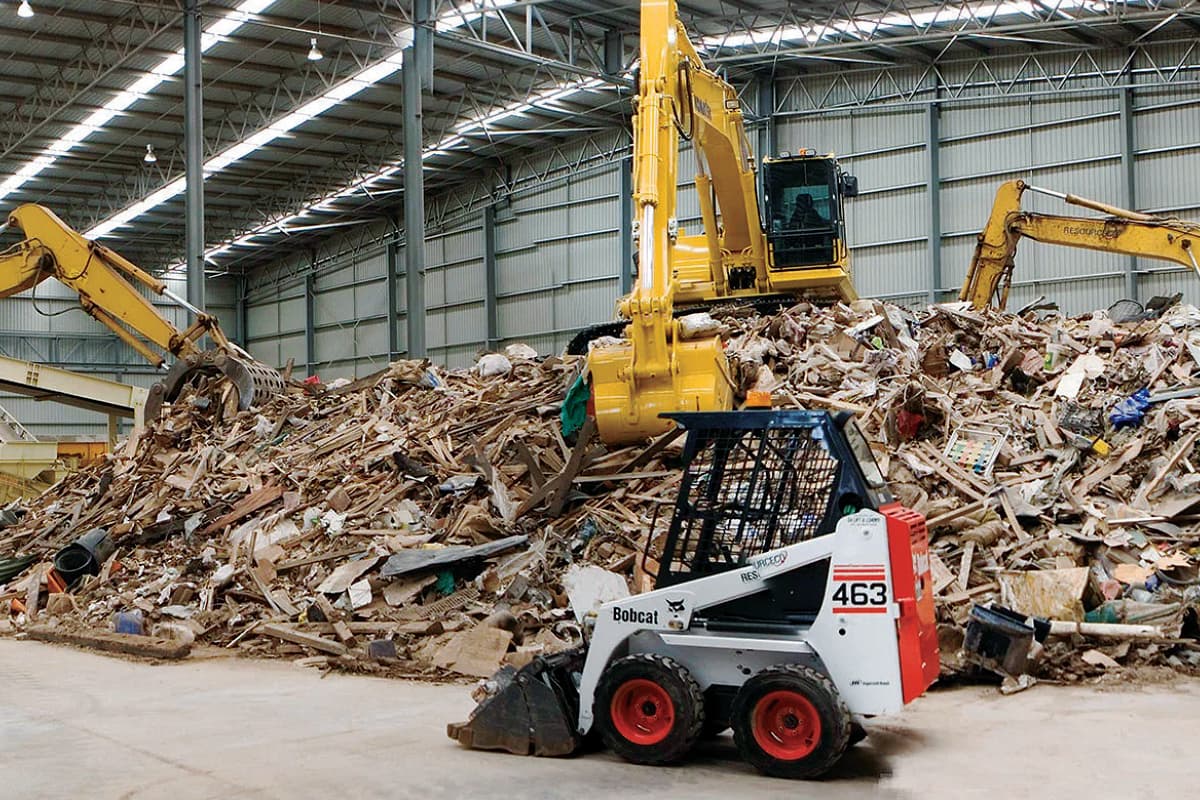
PEF is a highly precise manufactured alternative fuel made from dry and non-recyclable materials sourced from commercial, industrial and construction sectors. ResourceCo Asia’s PEF does not include municipal household waste or construction waste, which ensures a controlled and consistent feedstock for quality assurance. “We only receive industrial and commercial waste,” Cech explains.
The feedstock used to produce PEF contains up to 80% plastic waste and composite materials such as potato chip bags, which consist of layers of aluminium, plastic and print coating.
The feedstock also includes packaging labels made from laminated paper and plastic, carbon paper like receipts and invoices, which are non-recyclable or hard to recycle, and textile and rubber waste. This make-up contributes to the lower carbon footprint of PEF when burnt compared to fossil fuels.
According to Cech, the process of producing PEF involves only mechanical and physical processing, without any thermal or chemical processing. “What we have here in Malaysia is a two-stage shredding, [followed by] two-stage ferrous metal separation. Then, we have air separation and wind sifting, which helps us segregate the heavy parts like glass, stone, concrete or ceramics from the future fuel.”
ResourceCo Asia’s PEF does not come in fluid form. It is produced as a shredded, solid material made from non-recyclable industrial and commercial waste, engineered to meet the specifications of cement kilns.
In Malaysia, its PEF is only supplied to cement kilns, which operate at higher temperatures than boilers, making them ideal thermochemical reactors for alternative fuels. The first plant was set up in Chemor, Ipoh, the country’s cement manufacturing hub.
Cech says PEF is a tailor-made fuel for every cement kiln in Malaysia. ResourceCo Asia adjusts the recipes by measuring, monitoring or facilitating control over a total of 23 parameters.
Producing PEF involves sourcing the right mix of raw waste materials and processing the waste to ensure that harmful chemicals and inert materials are removed through a combination of mechanical, pneumatic, magnetic, eddy-current, optical and human processes.

Better waste separation and higher cost for landfilling needed
Solid waste is oftentimes not separated in Malaysia and ends up in landfills. There is also illegal dumping of industrial waste, which is sometimes burnt outside the manufacturing plant or estate, observes Cech.
This means a lot of waste ends up in landfills, and for operators like ResourceCo Asia, the collection of waste to produce PEF becomes more complicated and costly. It currently sources waste from manufacturers and industry players.
To make the production of PEF simpler and scalable, he suggests that Malaysia separate putrescible wet waste — mostly organic waste — from dry waste to save costs on waste separation. There should also be better segregation of dry waste using special bins for paper, cardboard, plastic, metal and glass, like in many European countries.

Rubber and textile recycling
In addition to producing PEF, ResourceCo Asia’s tyre recycling division Tyrecycle produces tyre-derived fuel (TDF) in Australia. It is made of shredded used tyres, called tyre chips, and manufactured through the same process as PEF. The TDF is used by industries as an alternative fuel.
“We have tyre chips. The basic size is 6in. We also produce smaller ones, which are 2in. There’s one product we have developed specifically for the Japanese chemical and petrochemical industry, where the size of the tyre chip is 1.5in liberated, meaning that all the steel has been taken out,” says Cech.
He says ResourceCo Asia has a construction and demolition (C&D) service in Australia where it crushes concrete bricks and construction rubble into green aggregates, which are eco-friendly construction materials. The company also does soil recycling, where it extracts contaminated soil from construction sites and extracts reusable soil.
Cech tells ESG that ResourceCo Asia is working on textile recycling as an upcoming project, and it is working closely with manufacturers of equipment for fibre processing and textile processing to set up the first plant, which will be based outside Malaysia.
“We believe the best solution for non-resellable and non-reusable textile waste is bringing it down to fibre. But it’s very complex, costly and not something that has become an industry standard yet.”
He adds that the project will be running outside the fuel business and will not affect the current PEF stream. “We have been doing the investigations and preparatory work, so we know pretty well what we want, how we want to make it and what product we will be able to produce from it.”
Save by subscribing to us for your print and/or digital copy.
P/S: The Edge is also available on Apple's App Store and Android's Google Play.